The Hierophant Tarot Card Meaning
The Hierophant represents tradition, spiritual mentorship, shared values. Numbered 5 in the Major Arcana, it signals tradition when upright and warns of rebellion against norms, rigid dogma, spiritual disconnection in reverse. In yes-or-no readings, The Hierophant leans yes.
The Hierophant, Card #5 of the Major Arcana, is the keeper of keys—the bridge between personal experience and collective wisdom. This card points to traditions, lineages, and belief systems that have been shaped over time: families, cultures, religions, schools, and any community where knowledge and values are passed down.
In a reading, The Hierophant invites you to consider where you get your guidance and how you participate in shared meaning. It can highlight the comfort of belonging to something bigger than yourself, the power of ritual and structure, and the importance of ethics. At the same time, it gently asks whether you’re following the rules because they’re true for you, or just because they’re familiar. This is a moment to learn from what has stood the test of time—while also claiming your right to question, adapt, and eventually teach from your own lived truth.
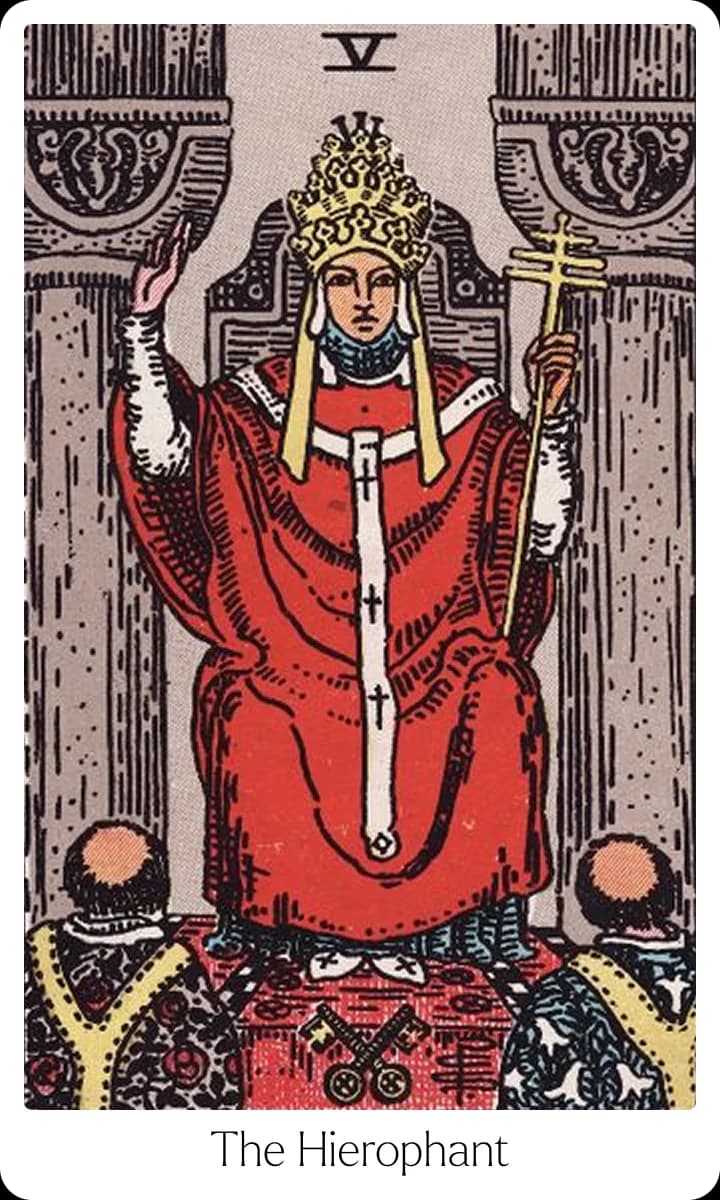
Modern framing & layout: Flickerdeck (2025).
Key Themes
Upright
Reversed
Artwork & Symbolism
Your eye goes straight to the crowned ruler on a stone throne—power that sits still because it doesn’t need to prove itself. The triple-layered golden crown and the tall staff feel like official authority, while the raised hand says, “Here are the rules—here’s the teaching,” the way structure gets passed down. That red robe brings heat and willpower, but it’s contained by the crisp white stole marked with crosses—discipline wrapped around desire.
Two smaller figures kneel at his feet, reminding you that leadership always creates a hierarchy: someone sets the plan, others follow it. Between them lie the crossed keys tied with red—access and boundaries at once, the right to open doors and the responsibility to keep them shut. The flanking pillars and strict symmetry drive it home: stability is built, maintained, and protected.
The Hierophant Upright
Upright, The Hierophant suggests a time of learning within structure: mentorship, study, spiritual practice, or entering a community with clear norms and values. There’s an emphasis on “tried and tested” paths—systems that can hold you while you grow, whether that’s therapy, a religious or spiritual tradition, a cultural practice, or an educational program.
This card encourages you to honor the wisdom that came before you. Instead of reinventing the wheel, you’re invited to sit at the feet of teachers, elders, or traditions that resonate. At the same time, upright Hierophant energy is healthy authority: it reminds you that real guidance never demands blind obedience; it supports you in developing your own conscience and integrity.
The Hierophant Reversed
Reversed, The Hierophant shines a light on your relationship with rules and tradition when they feel too tight or too hollow. You might be chafing against expectations—from family, culture, religion, or workplace norms—or going through the motions of rituals that no longer feel alive. There can be a sense of “I’m doing what I’m supposed to, but it doesn’t mean anything to me.”
This reversed card invites you to question inherited beliefs and to notice where authority has become rigid, judgmental, or misused. It’s a call to reclaim your spiritual and ethical autonomy: to keep what’s wise, release what’s oppressive, and, if needed, step outside the system to hear your own inner teacher more clearly.
The Hierophant in Love
In love and relationships, The Hierophant highlights commitment, shared values, and “what are we building together?” energy. It can point to long-term partnerships, marriage, or defining the relationship in a more official way. Tradition may be front and center—meeting families, navigating cultural or religious expectations, or creating rituals as a couple (date nights, holidays, weekly check-ins) that give the relationship a sense of sacred routine.
This card also asks: Do your relationship rules actually fit you? You’re invited to talk openly about expectations around fidelity, roles, communication, and the future. Love under The Hierophant thrives when both people feel respected, guided by a common moral compass, and free to co-create a relationship structure that feels both stable and genuinely meaningful.
The Hierophant in Career
In career, The Hierophant points to institutions, hierarchies, and established ways of doing things—corporations, schools, government, traditional industries, or any environment with clear chains of command. This can be a time of learning the ropes, seeking mentorship, or pursuing formal training, certification, or professional standards that give your work credibility.
You’re encouraged to pay attention to the ethics of what you do and who you do it for. Are you aligned with your organization’s values, or are you swallowing discomfort to “fit in”? The Hierophant can also show you stepping into a teacher, trainer, or role-model position—someone others look to for guidance on “how we do things here,” ideally with integrity and compassion rather than rigidity.
The Hierophant in Personal Growth
For personal growth, The Hierophant invites you to explore your belief system: what you were taught, what you’ve absorbed without noticing, and what you consciously choose to stand for now. It’s a powerful moment to study—through books, classes, spiritual practice, or therapy—and to let yourself be shaped by ideas and communities that feel ethically sound and nourishing.
This card also nudges you toward becoming a steward of wisdom, not just a consumer of it. Your experiences, mistakes, and healing can become teachings for others. Growth here looks like integrating tradition with authenticity: honoring your roots while giving yourself permission to evolve beyond what no longer fits.
The Hierophant as Daily Guidance
Today, The Hierophant encourages you to lean on structure: a routine, a practice, or a trusted guide. Return to something that grounds you—whether it’s a morning ritual, a conversation with a mentor, or revisiting the values you want to live by—and let that framework support your choices.
The Hierophant — Yes or No?
Is The Hierophant a yes or no card? The Hierophant is generally a yes card. Yes—if you’re willing to follow a structured, ethical path and seek guidance rather than going it alone. The Hierophant favors choices that align with shared values and established wisdom.
The Hierophant as Feelings
As feelings, The Hierophant is about respect, seriousness, and a desire for something “real.” Someone may feel a deep sense of responsibility toward you, wanting to do things the “right” way rather than rushing. There can be admiration, even a bit of awe—seeing you as wise, trustworthy, or spiritually significant. At the same time, their emotions might be filtered through rules or expectations; they could be holding back passion in favor of propriety, commitment, or what they believe is morally correct.
The Hierophant as a Person
As a person, The Hierophant is the mentor, elder, or tradition-keeper: someone who takes ethics seriously and cares about doing things properly. They tend to be steady, principled, and sometimes conservative in their approach—preferring established methods over experimentation. People come to them for advice, ritual, or structure, and they often occupy roles like teacher, counselor, spiritual leader, or senior colleague. At their best they’re compassionate guides; at their worst they can be rigid, judgmental, or overly attached to “the way it’s always been done.”
How Different Artists Interpret The Hierophant
Each tarot deck brings its own artistic voice and interpretive lens. Here's how 3 artists from Flickerdeck approach this card.
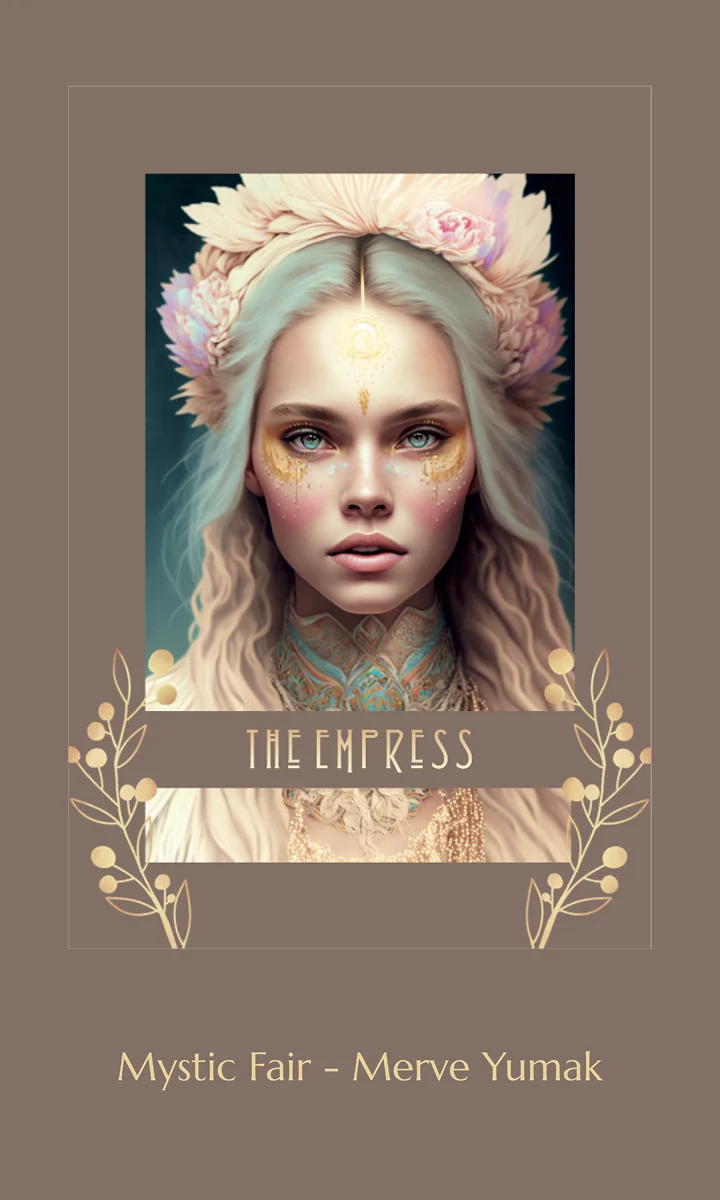
Pastel Dreams -Tarot
by Merve Yumak
Pastel Dreams softens the Hierophant’s authority into a tender mentor—emphasizing soulful initiation, somatic discernment, and devotional questioning rather than rigid doctrine or external control.
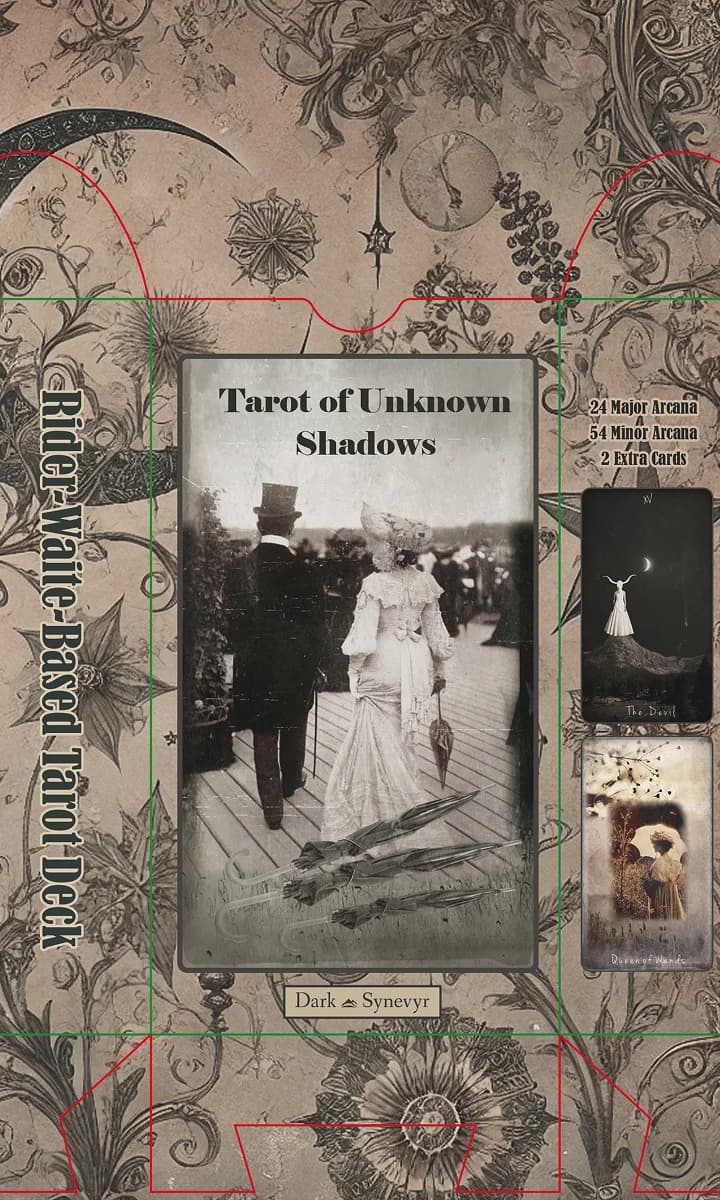
Unknown Shadows tarot
by Curator: Iurii Nazarenco
This deck frames the Hierophant less as mere authority and more as a threshold keeper, emphasizing the shadow within tradition and the invitation to actively discern, reclaim, or reshape inherited truths.

City Goddesses Tarot
by Meiko Harris
Where the universal meaning frames tradition and belonging, this deck reframes The Hierophant as an active ancestral transmission demanding spiritual elevation and accountable leadership rather than mere conformity.
The Hierophant in a Reading
In a reading, The Hierophant highlights the importance of guidance, community, and shared frameworks. In a “past” position, it can point to the influence of your upbringing, schooling, or religious/cultural background. In the “present,” it asks you to notice what systems you’re currently inside—workplaces, families, spiritual paths—and how they’re shaping your choices. In a “future” or “outcome” spot, it suggests moving into deeper commitment, study, or a role where you carry and transmit wisdom.
Paired with very independent cards like The Fool or The Magician, The Hierophant can signal a tension between freedom and tradition—do you need more structure, or are you over-conforming? With introspective cards like The Hermit, it emphasizes spiritual study and mentorship. When it appears with more challenging cards like The Devil, it may ask you to look at where authority or doctrine has become controlling rather than supportive.
The Hierophant as a Birth Card
The Hierophant appears in a birth card pairing when the usual birth-card date calculation reduces to 5 or 14.
Calculate your birth cards →The Hierophant as your arcana
Your arcana is the single Major Arcana card from adding every digit of your birth date; The Hierophant is arcana 5.
What it describes
Your arcana, The Hierophant, is the card of lineage: the knowledge, customs and values that reach you from other people and that you, in turn, hand on. You're the one who knows how things are done and why, who keeps the family recipe, who remembers which teacher said what. Institutions don't scare you; you can see what they're for. You find meaning in shared practice, whether that's a faith, a choir, a martial art, a trade with its own apprenticeships, or a weekly dinner nobody is allowed to miss. Belonging matters to you more than standing out. You learn well from a mentor and you become one early, sometimes without noticing.
Gifts and strengths
You are a steady teacher. You can explain a thing patiently, in the right order, without making the other person feel small, and you notice when a student has understood before they do. You keep things going: the tradition, the club, the standard everyone else was about to let slip. People trust your ethics because they're consistent; you don't have one set of rules for the room and another for yourself. You build community almost by accident, introducing people, remembering names, making sure the new person knows where the coffee is. And you give others the thing this culture is short of: a sense of being part of something older and larger than the week they're having.
Challenges and shadow
Tradition has a shadow, and it's dogma. The way things are done can become the only way, and you may find yourself defending a rule long after it stopped serving anyone, because changing it would feel like betrayal. Rituals can go hollow, too: the Sunday call, the annual event, kept up out of duty with none of the warmth that started them. Authority you respect can be misused, and loyalty can keep you in a community, a faith or a family pattern that has begun to hurt you. Questioning is not disloyalty; it's how you keep what is true for you, let go of what is merely familiar, and give yourself permission to become the teacher rather than only the student.
In relationships
You take commitment seriously, and you say so. Anniversaries, promises, the phone call every Sunday: these aren't chores to you, they're how love is made visible over time. Friends know you're in for the long haul, and partners know where they stand. The friction comes when your sense of how things should be done meets someone else's. You may push a partner or a friend toward the ceremony, the shared faith or the family way of doing things when they'd rather build something new together. Listen for that. The people close to you don't need you to be right about the form; they need you to be there, which you already are.
In work and purpose
Teaching, in some form, tends to find you: in a classroom, a workshop, a hospital corridor, a kitchen with a new hire, or a company where you've become the person who trains everyone else. You're also suited to institutions with a long memory, whether that's education, law, medicine, a faith community or a craft guild, because you understand that some things are worth doing the slow, proper way. Your purpose is about transmission: making sure what you were given survives you, and improves on the way through. The trap is the empty ritual, the procedure kept because it was always done. When you catch yourself there, ask what it was originally for, and rebuild from that.
Frequently Asked Questions
Is The Hierophant a yes or no card?
What does The Hierophant mean in love?
What does The Hierophant mean for career?
What does The Hierophant represent as feelings?
What does The Hierophant reversed mean?
Experience The Hierophant through Pastel Dreams -Tarot's unique voice in Flickerdeck
Discover tarot through dozens of artistic lenses — do readings, explore decks, and find the interpretation that resonates with you.
Get Flickerdeck