Death & The Emperor Birth Cards
Death and The Emperor is one of the most powerful pairings in the birth card system — two armored warriors, equally absolute, equally dependable, serving opposite functions with equal conviction. If these are your cards, this pairing illuminates a life shaped by two cosmic forces that cannot be softened, moderated, or negotiated with. One builds. The other clears. And neither answers to the other.
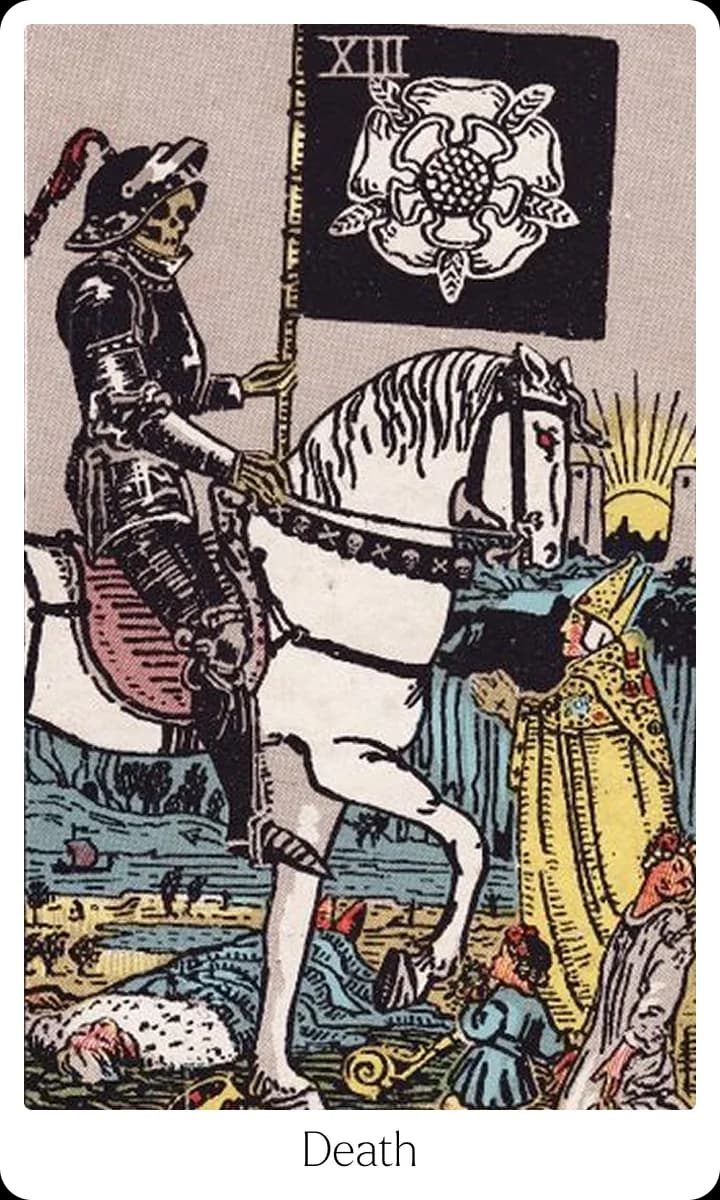
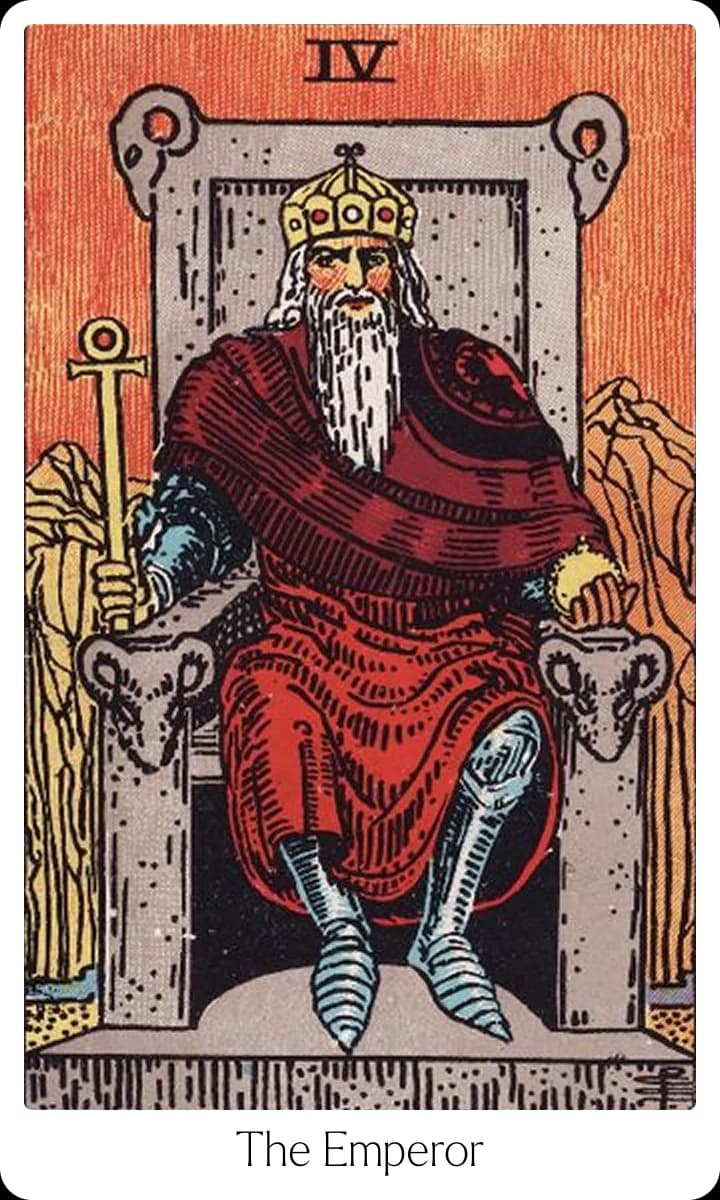
The Emperor, card four, is the archetype of order: authority, stability, the will to create systems that endure. He makes sense of things, brings order from chaos, and holds every mystery accountable to his law. Death, card thirteen, is the archetype of transformation — but not in the gentle, self-help sense. Death is equally armored, equally sovereign. His function is to mark the boundary where the known ends and to push everything past it into the unmapped. He is the force that ensures nothing outlives its purpose, the necessary disruption against which all of the Emperor's structures are ultimately measured.
Holding both of these energies means neither permanent stability nor comfortable impermanence is available. You build — seriously, solidly, with the Emperor's full authority — and then Death arrives, equally authoritative, and clears the ground. Not as punishment. As function. The Emperor makes life orderly. Death makes life possible by ensuring nothing chokes on its own permanence.
Gifts & Strengths
This pairing carries an unusual capacity to hold two things that most people experience as contradictory: the discipline to build something substantial and the clarity to recognize when it's done. The Emperor carries structural intelligence — the ability to see how systems work, to create order from chaos, to lead with authority that people trust because it's earned. This energy knows how to make things real.
Death's gift is equally powerful, not subordinate. Death doesn't just reluctantly teach you about endings — Death is its own form of mastery. Death's gift is understanding the edge of things: the point where the known gives way to mystery, where a system has served its purpose, where continuing would be preservation for its own sake. Most people avoid that edge. This pairing is drawn to it — a relationship with the unknown that the Emperor alone could never provide. Death gives you courage in the face of what can't be predicted or controlled.
Together, these gifts describe someone who builds things that matter and knows when to walk away from them — not because the building failed, but because every structure has a lifespan and you can feel when that lifespan is complete. That's an extraordinarily rare combination, and it produces people whose impact outlasts their presence. What you create is solid enough to survive your departure, and the willingness to depart keeps everything this energy touches alive and adaptive.
Challenges & Shadow
The hardest thing about this pairing is that both energies are absolute — and they're absolutely opposed. The Emperor builds for permanence. Death insists on impermanence. Neither compromises. The Emperor operates as if everything can be explained, accounted for, made orderly. Death's response is to dismantle every explanation that has gotten too comfortable.
The Emperor's shadow is rigidity — becoming a tyrant, controlling and manipulative, afraid of the dark, equating mystery with ignorance. When you feel threatened by change, your instinct may be to grip harder, impose more structure, deny that the cycle is turning. Death's shadow is equally dangerous: vicious, random, destructive without purpose, spreading upheaval for its own sake. When Death's energy is unintegrated, you might blow things up prematurely — not because transformation was needed, but because you'd rather destroy than feel the vulnerability of attachment.
There's also a particular loneliness to this pairing. The clarity you have about endings — seeing them coming while others are still in denial — can be isolating. You're often the person who names the difficult truth before anyone is ready to hear it.
In Relationships
In relationships, this pairing often shows up as depth and loyalty rather than ease. When you commit, the Emperor's energy makes that commitment feel like a fortress — stable, protective, enduring. But Death's influence means that even your most significant relationships will go through periods of profound transformation. Partnerships that survive this pairing's energy don't just evolve — they die and are reborn, sometimes more than once.
The partnerships that tend to work best with this pairing are with people who understand that both energies are real: the one that builds a home and the one that knows homes are temporary. The directness about endings that comes with this combination can feel brutal to people who prefer ambiguity — but the right person appreciates not being strung along, even when the truth is hard.
In Work & Purpose
This pairing excels in any role that involves building, restructuring, or transforming organizations. This is the energy of the founder who can scale a company and also the leader who can make the painful decisions when it's time to pivot. Turnaround management, strategic leadership, organizational design — anything that requires both construction and creative destruction.
Career paths with this pairing tend to follow the same pattern: chapters of intense building followed by complete reinventions. Death doesn't wait for convenient timing, and the Emperor can't negotiate with it. The transitions don't have to be comfortable. They just have to happen.
The Lifelong Journey
Early on, the cycles of building and clearing can feel punishing — as if the hardest version of everything is being asked. Over time, something shifts. The cycle stops looking like building-followed-by-loss and starts looking like two equally necessary forces doing their respective jobs. Death stops being the Emperor's antagonist and becomes his collaborator. The Emperor gives Death's disruption a structure within which to operate. Death gives the Emperor's creations the ability to evolve rather than ossify.
The later chapters of this pairing tend to be the most powerful — built with everything that's been learned, held with the Emperor's full authority, and released with Death's sovereign clarity when the time comes. Together, they make life both orderly and fresh, peaceful without tyranny, prosperous without stagnation.
Explore Each Card's Traditional Meaning
Death
Death, Card #13 of the Major Arcana, is the moment the old chapter truly closes so a new one can exist at all. It speaks to those times when life doesn’t just tweak the settings, it changes the whole operating system: a job is over, a relationship is done, an identity no longer fits. Something you’ve outgrown is asking to be laid to rest, even if part of you still wants to keep it on life support.
Full Death meaning →The Emperor
The Emperor, Card #4 of the Major Arcana, is the archetype of grounded power—the part of you that can take charge, set a plan, and actually follow through. Where The Empress is flowing and nurturing, The Emperor is the solid table everything rests on: structure, boundaries, and the calm confidence of someone who knows they can handle what comes.
Full The Emperor meaning →How Different Artists Interpret Death
Each tarot deck brings its own artistic voice and interpretive lens. Here's how 3 artists from Flickerdeck approach this card.
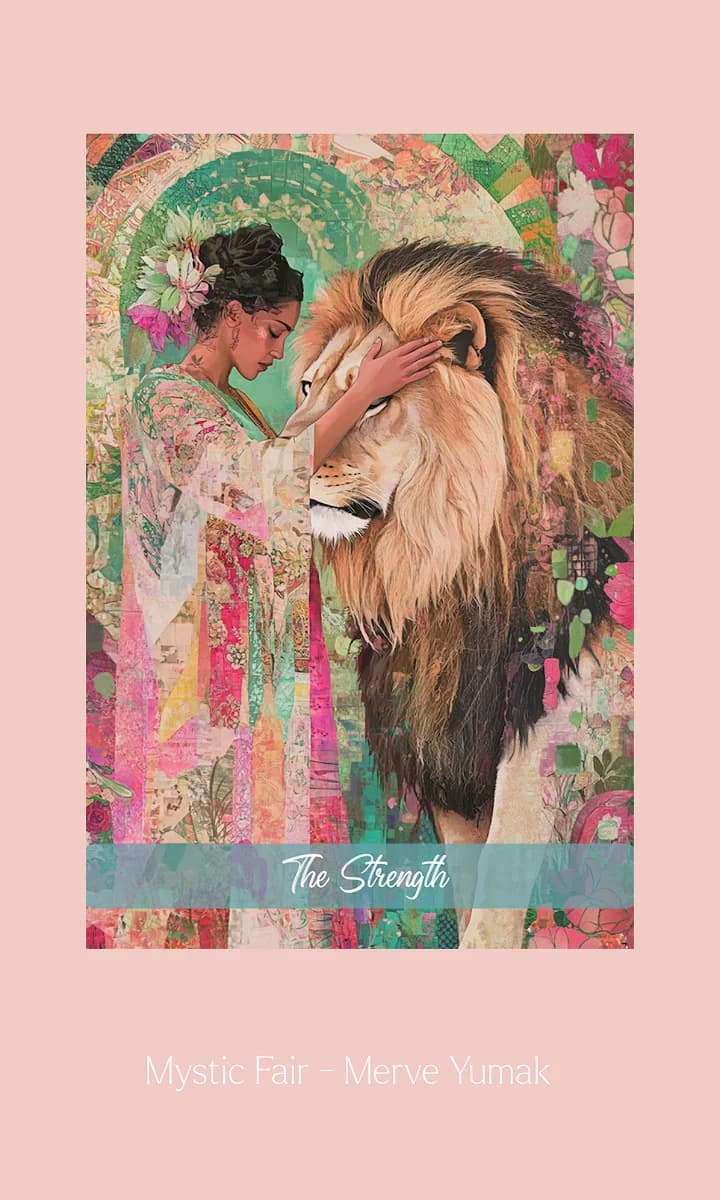
Mystic Fair -Tarot
by Merve Yumak
Where universal meanings often emphasize stark endings and the finality of a closed chapter, this deck leans into Death as a tender, cyclical transformation—focusing on spiritual renewal, surrender, and the quiet miracle of rebirth rather than the drama of loss itself.
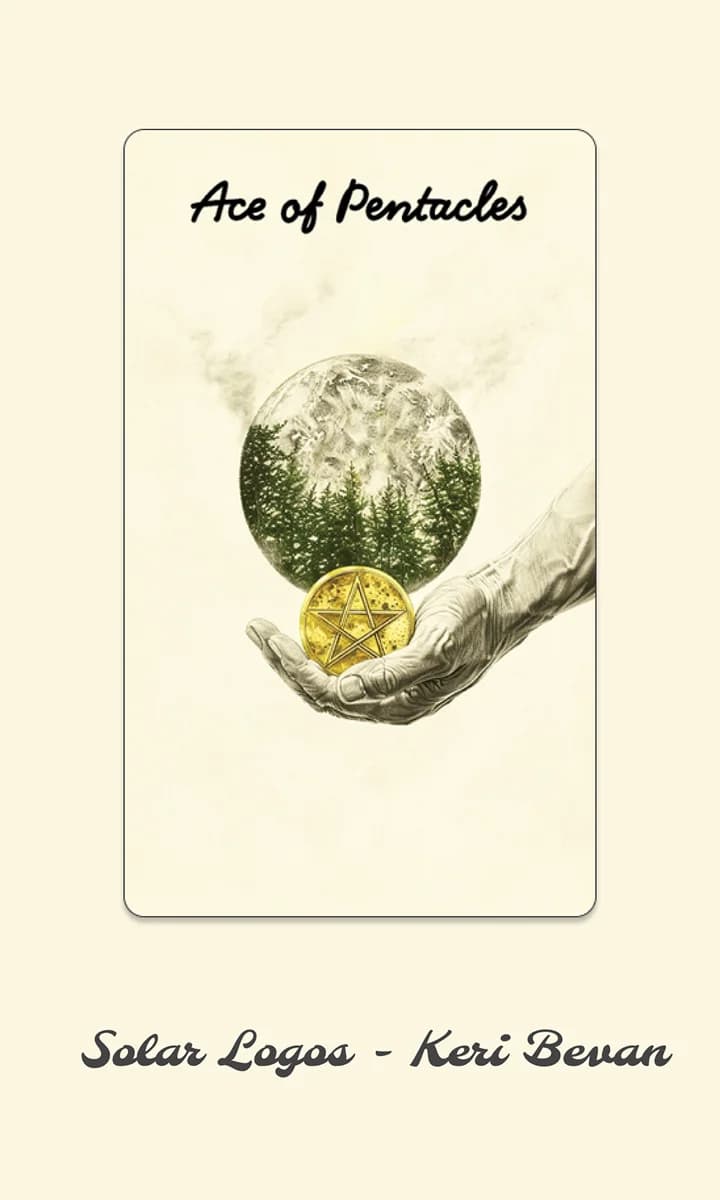
Solar Logos tarot
by Keri Bevan
While the universal meaning centers on closure and the finality of an ending, this deck leans into Death as an already-awakening metamorphosis—less about loss itself and more about the sacred, upward movement of your evolving self once you find the courage to cross the threshold.
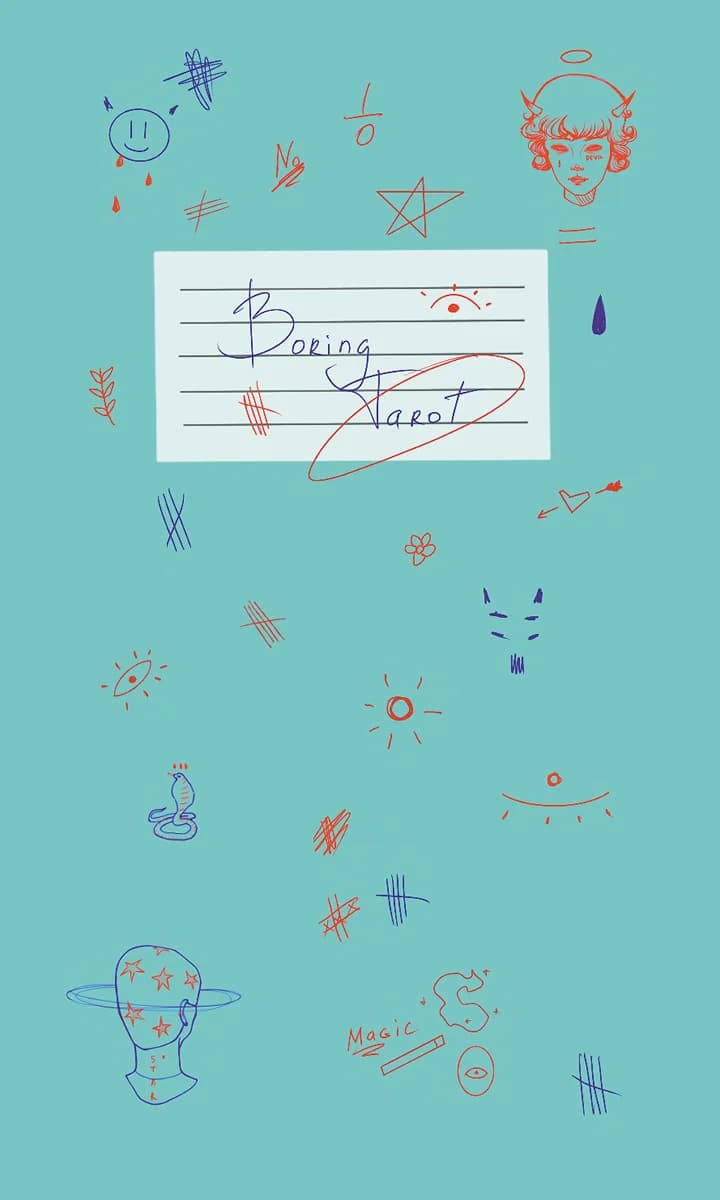
Boring Tarot
by Art: Dasha Zeleno Curator: Iurii Nazarenco
Instead of romanticizing transformation, this deck leans hard into the anger, emptiness, and identity void of endings, calling out how you keep doing the same stale moves even while everything else has already changed.
How Different Artists Interpret The Emperor
Each tarot deck brings its own artistic voice and interpretive lens. Here's how 3 artists from Flickerdeck approach this card.
Mystic Fair -Tarot
by Merve Yumak
While the universal meaning highlights external leadership and control, this deck softens The Emperor into an inner guardian of safety and self-mastery, emphasizing discipline as an act of devotion and spiritual grounding rather than mere order or dominance.
Solar Logos tarot
by Keri Bevan
Where traditional Emperors often stress outer control and worldly power, Solar Logos emphasizes inner alignment, sacred order, and leadership as a grounded, spiritually informed presence that radiates from your authentic self.
Boring Tarot
by Art: Dasha Zeleno Curator: Iurii Nazarenco
Instead of focusing on stable, protective leadership and clean structure, this deck leans hard into ego, superiority, fear, and the boredom of constantly having to prove yourself, framing The Emperor as a self-aware power trip you eventually outgrow.
Your Personal Year Card
If Death / Emperordescribes who you are, your personal year card describes the energy of the year you're in. It changes every year, offering a different lens on the themes you'll encounter.
Frequently Asked Questions
What does it mean if my birth cards are Death and The Emperor?
Is Death and The Emperor a powerful birth card combination?
What careers suit Death and Emperor birth cards?
Are Death and Emperor birth cards compatible with other pairings?
Death and The Emperor tarot birth card personality
Explore your birth cards in Flickerdeck
Experience your birth cards through hundreds of artistic interpretations — do readings, explore decks, and find the lens that resonates with you.
Get Flickerdeck